

CLU22126 Living on the Bay of Naples
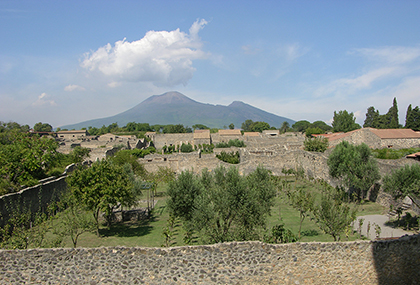
Cicero described the Bay of Naples as “….that Bay of Luxury” (cratera ille delicatus) (Letters to Atticus II.8), but to what extent was that true? This module will explore the archaeology of the area, with a particular emphasis on the late Republican and Roman development of such familiar Roman sites as Herculaneum, Pompeii, and the surrounding suburban villas and farms, as well as the important port cities of Puteoli and Naples, and the Phlegrean Fields (Campi Flegrei). Economic, social and cultural issues will be addressed through a close study of the rich evidence from this region. New archaeological evidence from excavations carried out in the last few years will be included in order to re-evaluate the Bay’s importance in both the Roman period and within modern scholarship today. A special study will be made of the eruption of Vesuvius in AD79 which has a unique combination of primary evidence (documentary, vulcanological, archaeological, geological, environmental) allowing a detailed reconstruction of this catastrophic event
- Module Organiser:
- Dr Hazel Dodge
- Duration:
- Semester 2
- Contact Hours:
- 16 (11 lectures, 5 seminars)
- Weighting:
- 5 ECTS
- Assessment:
- 100% coursework (three seminar write ups)
- Course Open To:
- Classics, Ancient History and Archaeology; TJH Ancient History and Archaeology; Columbia Dual Degree; Ancient and Medieval History and Culture; Visiting; Open Module
Learning Outcomes
Upon the successful completion of this module students should be able to:
- Demonstrate sound historical and geographical knowledge of the Bay of Naples area within the broader context of Roman Italy.
- Apply visual and spatial skills to the analysis of artefacts, architectural plans and other archaeological diagrams relating to the main sites covered.
- Apply knowledge of primary sources (archaeological, artistic, textual) relevant to the module and evaluate them together critically.
- Evaluate the major theoretical approaches, debates and scholarship relevant to the module.
- Discuss the above, both orally and in written form, in a clear and scholarly manner.
- Work effectively in small groups